
Welcome

NANDC is a self-governed, self-directed and independent organization empowered by the Los Angeles City Charter. This charter offers neighborhood councils a role in the City's decision-making process. We as citizens are given the opportunity and obligation to stay involved with developments in our area that affect us.  Come get involved!  After all, it's your community!

Take a few moments to find out who we are, what we do and how you can become involved.

What We Do

We promote public participation in city governance and decision making processes, to make government more responsive to our local needs and requests,  creating more opportunities to build partnerships with government and private entities to create more opportunities for our neighborhood.  We work with stakeholders to make a difference in the community with such projects as I Hablo U, the Pet Park Project, and the Community Involvement Program.


How To Get Involved

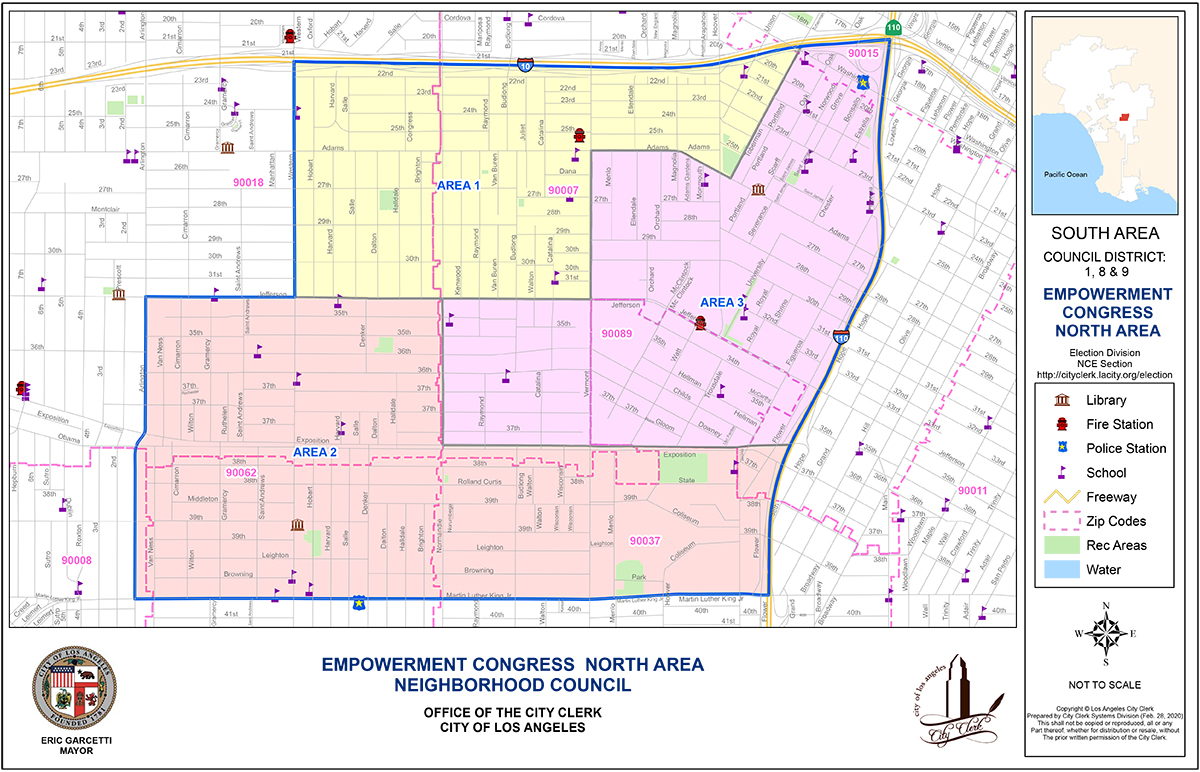
Anyone who lives, works or owns property in our boundaries is welcome to get involved. View the Boundary Map. Opportunities include:

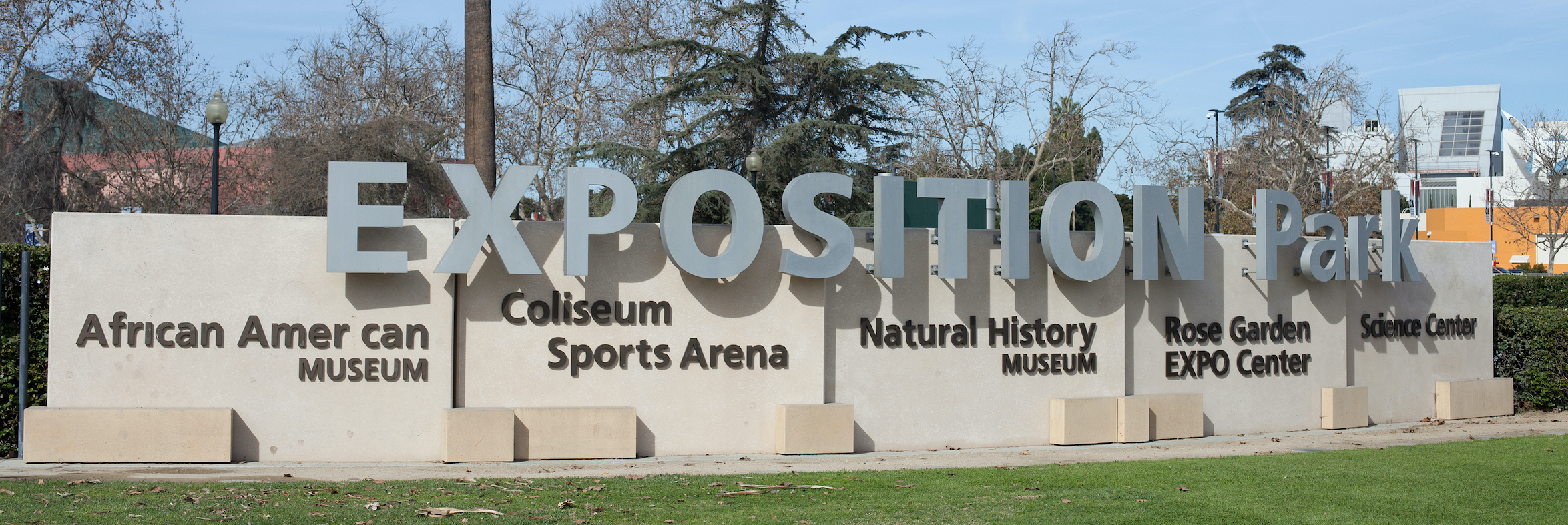
Come to a meeting! We meet First Thursday of the month from 6:30 p.m. - 9:30 p.m. in the Martin Luther King Park gymnasium, 39th and Western Avenue, the building just south of the Exposition Park Library, entrance on the south side.

Join a committee: Go to the Committee list under What We Do on the top menu

Contact a board member

Contact other elected representatives

Sign up for our newsletter on the right side of this page

Our mailing address is:
PO Box 77367
Los Angeles, CA 90007

Troy Camp

Troy Camp Gets Funding from Neighborhood Council

Originally published in the Daily Trojan, April 5, 2009

The volunteer organization has struggled to find adequate funds in the economic decline.

Troy Camp leader Julien Kacou, a sophomore majoring in history, talks to his group of students Saturday at an event on campus.

USC’s oldest and largest philanthropy, Troy Camp, received $8,000 from the North Area  Neighborhood Development Council to cover the cost of sending 43 children to the organization’s annual week-long summer camp program.

Troy Camp, a year-long mentorship program for more than 230 students from 18 neighborhood schools, hosts an annual week-long stint at sleep-away camp for several of the kids — many of whom have never been away from home or to a summer camp before.

While all Troy Camp events and activities are free for participating children, after a particularly tough economic year, the organization was looking for new sources of funding to help them send more kids to camp.

With the support of Josh Watson and Max Slavkin, two USC students who are NANDC board members, members of Troy Camp submitted a proposal to the NANDC asking for $8,000, said Brad Silnutzer, the co-executive director of Troy Camp and a senior majoring in communication.

Slavkin, a board member and a senior majoring in political science, said he encouraged Troy Camp members to apply for funding from the Council when he saw they were struggling.

“NANDC has all this money to better the community,” he said. “Troy Camp needed the money, and the board was very interested in [its presentation].”

Shawn Simons, newly elected president of the NANDC, said Troy Camp was a good fit for the council because it deals with youth in the community.

“One of the things that really touched me is that it’s run by students,” she said. “I was really impressed by the students’ commitment to the program.”

Katie Perri, Troy Camp’s director of finance and a graduate student in public policy, said this is the first time Troy Camp has asked for funding from the NANDC, and while the original request was for $12,000, the NANDC advised them to lower the figure to $8,000 to better fit the NANDC’s budget of $50,000.

According to Perri, Troy Camp has dealt with three major financial issues in the past year that inhibited their budget for the camp program.

Troy Camp sponsors two “Pass the Can” events each year — one during basketball season and one during football season — which provide a great deal of their revenue. According to Perri, Troy Camp lost $6,000 to $7,000 when the athletic department canceled the basketball “Pass the Can” fundraiser at the last minute.

Additionally, Perri said, the cost of camp fees has gone up an average of 17 percent per year in the last four years.

“Just because our fees go up doesn’t mean that people donate more — especially not now and definitely not at a rate of 17 percent per year,” she said.

And it appears the recession has affected even Troy Camp’s most generous donors.

“We have several large donors who give thousands of dollars to our organization every year. A couple of these donors cut their average annual donation in half this year, and this really hurt us,” Perri said.

Fewer funds will mean bringing fewer kids to camp, she said.

In 2008, after receiving more than 470 applications, the organization could only take 213 kids to camp, Silnutzer said.

This year, the organization has already received 550 applications, and Silnutzer said he anticipates it will bring even fewer campers than last year — even with the additional money from NANDC.

But Silnutzer said the NANDC’s money will make an enormous difference to the organization.

“Without this money, we would not be able to affect as many kids,” Silnutzer said. “$8,000 is very significant for us. It’s a recognition of what we do being acknowledged by the community as something important.”

Watson, an NANDC board member and a graduate student in educational leadership, said the proposal, which was presented to the board by Silnutzer and Perri, showed organization and thought.

“They had a real plan on how they wanted to move forward,” Watson said. “It was really our pleasure to partner with them.”

Watson said he applauds Troy Camp’s work in the community.

“Troy Camp has done a great job of helping to develop young people into engaged citizens,” he said. “It has a real track record to prove that, so for me it’s a great project to work with based on their organization [and] their leadership.”

Slavkin said he agreed.

“All students know what an incredible service Troy Camp is to USC and the community around USC,” he said. “It’s very worthwhile for us to have Troy Camp in the community around us.”


Our Name

The early Eighth District Empowerment Congress, created by now Supervisor Mark Ridley-Thomas was a community-based education and mobilization program. It has been acknowledged as the model for the Los Angeles citywide neighborhood council system created by the change City Charter.

We still proudly carry the early moniker in our name as the 'Empowerment Congress North Area Neighborhood Development Council'.  You may call us NANDC for short!

Our Community

NANDC is located in West Adams, one of the oldest neighborhoods in Los Angeles, with most of its buildings erected between 1880 and 1925. It was once the wealthiest district in the city, with its Victorian mansions and sturdy Craftsman bungalows home to Downtown businessmen and professors and academicians at USC. In the 1990s, three areas of West Adams were designated as Historic Preservation Overlay Zones by the city of Los Angeles, in recognition of their outstanding architectural heritage.